Seattle, Bellevue Facial Fillers: Restylane, Perlane, Radiesse, Sculptra, and Bellafill®
Fillers and Volumizers
The field of facial fillers has grown over the last several years to an amazing array of exciting new products. These volume enhancing substances answer the popular desire for non-invasive, minimal downtime rejuvenation. Filling agents replace the age-related loss of the skin’s natural components: fat, water, collagen and hyaluronic acid. In Dr. Zemplenyi’s practice, fillers including Restylane®, Perlane®, Juvederm®, Radiesse®, Sculptra®, Belotero® and Voluma® are each used to best effect. Each of these substances has its own advantages for wrinkle reduction and plumping treatment in various areas of the face. Fat injection with one’s own fat transferred from one area to another is another alternative to replace lost facial volume. Dr. Zemplenyi also uses Selphyl, a platelet-rich gel matrix, to induce the body’s natural collagen production. Additionally, injection of any of these fillers may be combined with neuromodulators, Botox®, Xeomin® and Dysport®, to relax muscles for further rejuvenation.
Click Here to View Our Facial Fillers Gallery
Why Fillers?

Areas of potential volumization
Most fillers consist of the naturally occurring skin component, hyaluronic acid, with volumizing effects apparent right after injection. As shown on the adjoining diagram, fillers can be injected into multiple areas of the face where they are ideal for smoothing wrinkles and restoring lost volume. Depressed scars (acne and traumatic) as well as hollowed, sagging tissues can be remodeled with non-invasive volume replacement using a variety of fillers. The duration of fillers’ effects depends on many variables such as the site of injection, the natural rate of degradation and absorption, and the patient’s metabolism. All of these substances, with the exception of Bellafill®, are fully absorbable by the body and thus require periodic re-injection.
At the Bel-Red Center for Aesthetic Surgery in Bellevue, Dr. Zemplenyi performs the injections himself taking into account and discussing with the patient, the facial contour and areas of concern. The choice of the particular filler used depends on the intended region of the face to be volumized as well as patient’s personal desires and budget. The volume of filler injected depends on the amount of correction required – since volume loss increases with age, a person in her or his thirties requires less volume for a full aesthetic correction than someone in her or his fifth decade or later.
Maximizing Comfort!
In addition to careful selection and placement of the volumizing substance, Dr. Zemplenyi, uses the latest techniques to maximize patient comfort. He uses the smallest, thinnest needles, combines local anesthesia with skin cooling and has introduced a new vibratory anesthesia device to block pain receptors in the injection area. (Learn more about vibratory anesthesia) For patients who desire further discomfort management, a topical anesthetic agent is available. As a cosmetic surgeon in Belleuve, Dr. Zemplenyi is passionate about his techniques and has started using thin cannulas for volume augmentation of the lips and tear troughs. These cannulas allow for more precise delivery of small quantities of the product while further diminishing on discomfort and bruising. While some bruising can occur following treatment, Dr. Zemplenyi suggests a trial of Arnica montana tablets one day prior to the injection as well as avoidance of aspirin and other non-steroidals such as Motrin and Alleve for one week prior to the treatment. Patients see a result right away, and Dr. Zemplenyi will work with you respecting your aesthetic input and desires.
Fillers in a Nutshell
Restylane®, Perlane®, Juvederm®, Voluma®, and Belotero® are hyaluronic acid fillers, particularly useful for patients who have not previously received fillers since their effect is reversible with additional injection of an enzyme. Voluma® is a thicker hyalorunic acid filler that has been approved by the FDA for cheek augmentation. Its effects may last for two years or longer. As a hydroxyl apatite filler, Radiesse® is an excellent choice for injections into areas adjacent to bones such as in the mid-cheek (malar area) and the lower jaw region to offset jowls. Injection of any filler substance lends itself to combination with neuro-modulators such as Botox®, Xeomin® and Dysport® to gently weaken muscle contraction and soften and erase wrinkles in the forehead and crow’s feet.

Before/After
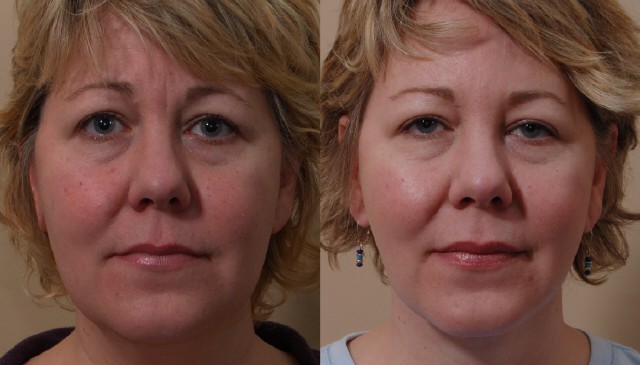
Correction of forehead (glabellar) line with Restylane and Botox
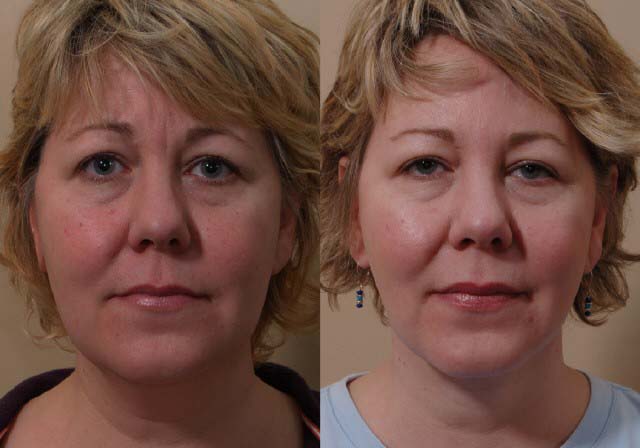
Restylane®, used safely and successfully in Canada and Europe since the late 1990’s, had been available in the US since approval by the FDA in 2004. It is a clear, smoothly injecting gel made of hyaluronic acid. Since hyaluronic acid occurs naturally in human skin, the risk of allergic reaction is virtually eliminated. Restylane is highly effective for the filling of nasolabial folds (smile lines), the tear troughs below the eyes as well as for lip augmentation. Correction lasts approximately six months as this filler is naturally broken down by the body. Periodic re-injection as needed, maintains the restored more youthful appearance.
Approved by the FDA in June 2014, Restylane Silk® is the latest hyaluronic acid filler available for restoring volume. Restylane Silk® has been specifically approved for use around the mouth area-plumping lips and filling smokers’ lines around those lips. Its composition with smaller, smoother particles than its sister fillers and its soft texture, allow use of a tiny needle for injection. The ultrafine needle and the lidocaine anesthetic already included with the filler, make treatment around the sensitive lip and mouth area a more comfortable experience. Whereas, other products in the high movement lip area last only three to four months, the Restylane Silk® FDA trial still showed volume improvement at six months.
Perlane ®, released in the US in 2007, is a sister substance of Restylane containing larger particles of hyaluronic acid in a higher concentration. Perlane may be used in the same sites as Restylane and Juvederm but is injected into a deeper plane under the skin surface. It is therefore excellent for volumetric augmentation (correction) of cheeks, orbital rim hollowing and wasting of the temples. It may also induce the body’s own collagen synthesis.
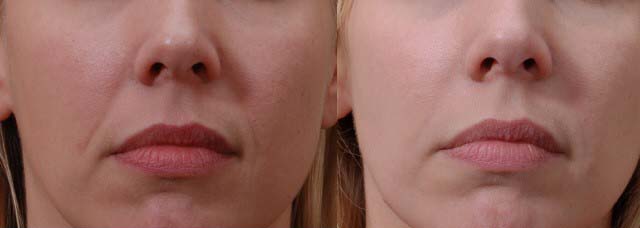
Juvederm ® is another hyaluronic acid filler released in the United States in 2007 by the FDA. Its hyaluronic acid draws water into the skin, restoring a more youthful appearance to the face. With its soft texture, Juvederm is very effective in plumping thinning lips and lifting smile lines around the mouth.
Before/After
Correction of nasolabial folds with Juvederm
Belotero® is a Swiss-made hyaluronic acid filler distributed by Merz. Softer than Juvederm, it is especially useful for injection in the tear trough and the fine vertical lines of the upper lip. It appears to have a shorter duration than the other hyaluronic acids.
Voluma®, a French-made hyaluronic acid filler made for Allergan, had been available in Canada for about four years before being released in the US at the end of 2013. It is similar to Juvederm but has been specifically FDA-approved to add volume to the cheek area, adding fullness to restore a more youthful contour for up to two years in some patients.
Radiesse ® is a synthetic product consisting of microspheres of calcium hydroxyl apatite, a naturally occurring component of bone matrix. Introduced in the US in 2006, this innovative product lasts longer than most other non-permanent fillers. Radiesse is best used deposited deep, adjacent to bone and is thus especially valuable in enhancing the cheeks and the mid-face. As with hyaluronic based fillers, there are no associated allergic reactions with Radiesse since its components occur naturally in the body. It come packaged in a 1.5cc syringe as opposed the usual 1cc packaging of other products, enabling greater volumization of the facial area. The unique injection technique, vibratory nerve blocking, cooling, and local anesthesia routinely used at Bel-Red Center for Aesthetic Surgery provides a practically pain-free experience for our Bellevue and Seattle cosmetic patients even when larger volumes are injected. In some patients augmentation lasts one to two years, especially if the product is deposited deep adjacent to bone. Radiesse is highly effective and FDA-approved for improvement of facial folds as well as for volume augmentation of the cheek lipo-atrophy seen with the aging process or in patients with HIV.
Before/After
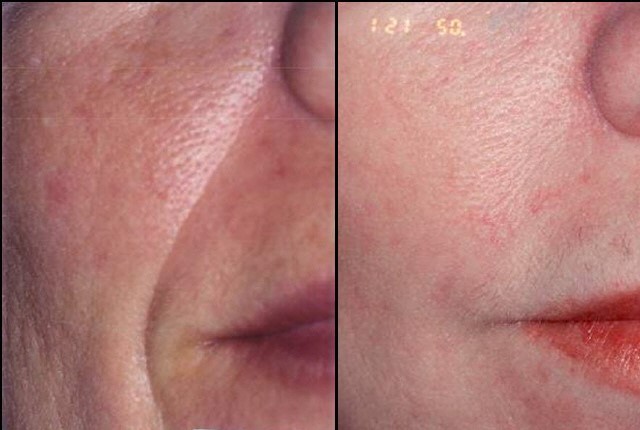
Nasolabial augmentation with Bellafill® after one year
Sculptra ®, known in Europe as Nufill, had been available outside of the United States for about ten years prior to its release in the US in 2004. It was then officially approved by the FDA for treatment of loss of cheek fat (lipo-atrophy) such as seen in men infected with HIV. It is now used very successfully for volume augmentation and reversal of soft tissue atrophy seen in the aging face. Sculptra uses a biodegradable substance, L-polylactic acid, which has been demonstrated to induce synthesis of the patient’s own (native) collagen. This native collagen stimulation fills in age-related tissue loss for a semi-permanent rejuvenation which may last for over two years. While it is clear that new collagen formation occurs, there exists individual variation in the actual amount of collagen produced by each treatment. In general, three or more serial treatment sessions spaced about four weeks apart are needed to promote enough collagen renewal. Due to its particulate size, Sculptra is injected through a larger gauge needle than Restylane or other hyaluronic acid fillers, thus making some bruising possible. Sculptra plays an important role not only for patients needing augmentation of larger volumes of soft tissue, but also as the main cosmetic filler for three-dimensional improvement of all facial regions. While Sculptra is injected into deeper tissues and takes several weeks for maximal effect to appear, it may be combined with other fillers injected into more superficial layers of skin for immediate improvement.
Before/After
Malar (cheek) augmentation with Radiesse and Sculptra
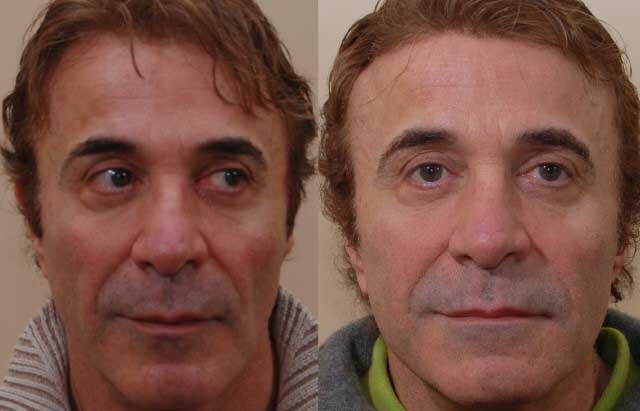
Selphyl ® is a platelet-rich gel matrix that can be combined with hyaluronic acids to potentiate collagen synthesis. Sometimes called the “Vampire filler” or the “Vampire facelift,” Selphyl uses only the body’s own natural platelets to produce collagen and improve the skin’s appearance. This innovative approach uses a small amount of one’s own blood (similar to a blood draw for lab work), from which to extract platelets which are then combined with the Selphyl gel matrix. Dr. Zemplenyi then injects the platelet-rich plasma gel into the soft tissue areas being treated. Growth factor proteins released by platelets induce the body to produce collagen, plumbing skin and smoothing wrinkles. Selphyl effectively treats hollowed tear troughs where the thin skin may remain plumped for up to two years after treatment.
Another new method used for the benefit of Bel-Red Center’s Eastside, Bellevue and Seattle patients involves using the micro-needling technique to introduce Selphyl gel into the skin to stimulate natural collagen production. Sequential skin treatment with Rejuvapen microneedling can achieve a smoother, fresher complexion.
Fat Injection (lipo transfer) can naturally enhance volume by transferring fat from one area of the body (such as abdomen, thighs) to another where age-related soft tissue loss has caused a sunken appearance. The fat is gently harvested from the donor site and injected into the recipient area. Hollowed eyelids and cheeks, deep nasolabial folds and marionette lines can benefit from this all natural filler of which, for most people, there is an adequate supply. Survival of fat varies depending on location, lasting longer in locations with less movement such as the cheeks and shorter in areas with more movement, such as the mouth. After lipo-transfer, there may be mild discomfort in the donor area. Bruising and swelling in the injected recipient site generally improves in less than a week. Depending on the amount of fat transfer, anesthesia may be local, or sedation, for larger amounts of fat repositioning. At the Bel-Red Center for Aesthetic Surgery, Dr. Zemplenyi can accommodate any level of sedation for maximal patient comfort.
Voluma Juverderm and Bellafill® – A Comparison of the Long-Lasting Facial Fillers
While we may not be able to turn the clock back to the squeezable chubby cheeks of a two year old, the panoply of volume enhancers and facial fillers available today can restore the fuller, plumper look of a younger you. Among the many dermal filler products available, the two described below are long lasting, not needing reinjection several time a year.
FAQ
- What is Bellafill®?
- Bellafill® is a combination of microspheres suspended in bovine collagen along with lidocaine anesthetic for numbing during injection. The synthetic microspheres consist of polymethylmethacrylate (PMMA), a substance safely used for decades in medical implants. These microspheres remain unabsorbed, supporting the skin, while the bovine collagen around them is resorbed by the body. The microspheres, furthermore, stimulate your own native collagen production for a lasting effect. A follow-up study of patients treated with Bellafill® showed that at 5 years out there was continued improvement and wrinkle correction. Persons treated with Bellafill® can undergo resurfacing laser treatment for further rejuvenating effect.
- How long has Bellafill® been used?
- There has been long experience with Bellafill®, which was released by the FDA in 2007 for enhancement of nasolabial folds (smile lines).
- Where can Bellafill® be used?
- In addition to smile lines, it has since been used successfully off-label to enhance volume and fill wrinkles all over the face. It however, should not be used for augmenting the lip or vermillion border.
- How long does Bellafill® last?
- Unlike many other fillers which are absorbed by the body and require reinjection, Bellafill® does not resorb and can last for over five years. An allergy skin test is necessary prior to Bellafill® injection to make sure that there is no allergy to the product.
- What are the Risks of Bellafill®?
- Persons with an allergy to any bovine collagen product or with a positive Bellafill® skin test are not candidates for Bellafill® use. This is very rare. It is also contraindicated in persons with a tendency for excessive scar formation. As with any filler, there can be bruising, swelling, redness, and tenderness at the site of injection which usually resolve over several days. Rarely a foreign body tissue reaction with lumpiness at the injection site, treatable with steroid injection, can occur.
- What is Juvederm Voluma?
- Juvederm Voluma is a new hyaluronic acid filler. It consists of long chains of sugars, hyaluronic acid, naturally occurring in the skin. Its longer lasting property is due to a special cross-linking formulation which slows degradation and provides a thicker texture for improved “lifting” capacity as well as longer duration. It is formulated with lidocaine for numbing and comfort during injection.
- How long has Juvederm Voluma been used?
- Voluma has recently been introduced in the United States, approved by the FDA for cheek volumization, toward the end of 2013. It has however been used in Europe since 2005 and in Canada for the last four years.
- Where can Voluma be used?
- Voluma was FDA approved for volume augmentation in the cheek area and portions in the middle of the face in adults over age 21. It restores the midface volume lost during aging, adding cheekbone definition and providing lift to hollowed-out areas for a more youthful facial contour.
- How long does Voluma last?
- Due to its cross-linking, Voluma avoids degradation, allowing it to last almost twice as long as other hyaluronic acid fillers. Studies have shown volumizing effects up to 2 years.
- What are the Risks of Voluma?
- There can be bruising, redness, tenderness and discoloration at the site of injection which usually resolve over several days. If lumpiness occurs at the injection site, the advantage of Voluma and other hyaluronic acid fillers over non-hyaluronic acid fillers, such as Bellafill®, is that Voluma can be dissolved with an enzyme called hyaluronidase. Thus, incorrect placement can be “erased” and does not have to remain until it is naturally reabsorbed by the body. Persons with any history of history of allergies to gram-positive bacterial proteins or lidocaine should not use Voluma.
- Comparison of Voluma and Bellafill®
- Cost
Consideration should be given be to the overall cost of treatment. With the two fillers similarly priced, the overall cost of Bellafill®, with its longer duration, will in the long run be less.
Areas of treatment
Including off-label use for both products, the midface is the target region for treatment for both products.
Effect of treatment
Both products achieve lift and volume augmentation in the target areas.
Risks
· Hyaluronidinase available to dissolve undesirably placed Voluma. No such dissolving product available for Bellafill®. · Bellafill®, rarely, may cause lumpiness at the injection site.
Bellafill® and the new Juverderm Voluma are wonderful alternatives for less-invasive, minimal down-time facial volume renewal. At the Bel-Red Center for Aesthetic Surgery, we offer these and many other choices. The “liquid facelift” with these long-lasting fillers is only one of many rejuvenating techniques available for our Seattle and Bellevue patients.

Free Download! The Anatomy of the Facial Aging Process:
Download this patient tool now to learn how you can combat the facial aging process with facial rejuvenation treatments.
I had such a positive experience here with Dr. Z and his staff. From the initial consultation to my post-surgery appts. I couldn't have asked for a better experience. All my questions/concerns were addressed, the surgery itself went really well (and I am so happy with my results, seriously life changing), my recovery went smoothly and Dr. Z gave me his personal cell # so I could reach out if I had any worries during my recovery. Dr. Z and his staff truly care about their patients and go above and beyond to deliver the best results! I highly recommend coming here if you need any aesthetic surgery, you won't be disappointed.